
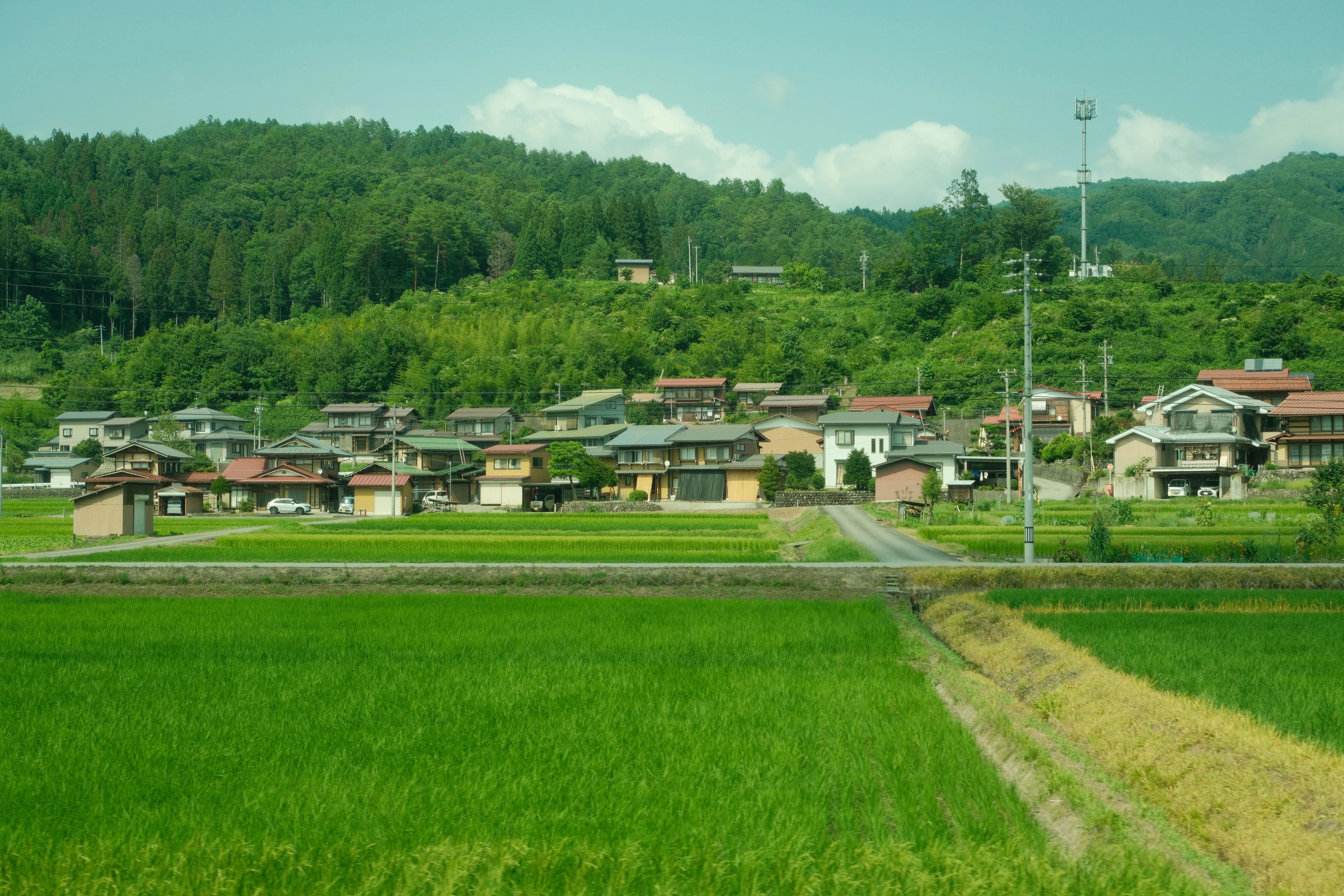
Most visitors “do” Japan in its big cities and leave. An hour or two out, the country turns into mountains, rivers, coastlines, and thatched-roof villages where the pace drops and the crowds thin. The hard part isn’t whether to go — it’s choosing where, and knowing what you’re signing up for. This guide is the honest version.
I work in rural Japanese tourism, so this is written from the operating side rather than a highlights reel. The travelers who enjoy the countryside most are almost never the ones racing between sights — they’re the ones who pick one area and let it set the pace.
Is rural Japan actually worth it?
Yes — if you want quiet, scenery, food, and everyday local life rather than a packed checklist. It’s slow travel: fewer “attractions,” more atmosphere. If your trip depends on ticking off famous sights, stay closer to the cities; if you want space and calm, the countryside delivers.
The countryside rewards a different kind of traveler. You trade the certainty of a famous temple for a valley you’ll half have to yourself, a meal cooked from what grew nearby, and a slower rhythm. That trade is wonderful if you want it — and frustrating if you were expecting a dense list of sights. Knowing which kind of traveler you are is the first decision.
What kinds of rural Japan are there?
Broadly a handful of types: thatched mountain villages, historic post towns, fishing coasts, terraced farmland, snow country, and onsen-and-forest highlands. Each makes a different day — a village walk, a harbor lunch, rice terraces, deep snow, or a hot-spring valley. Choose the landscape first, then a specific region within it.
This is the most useful way to narrow things down. Rather than starting from a single “must-see,” start from the kind of place you want to spend a day in:
| Type | What a day feels like | Well-known example regions | Best season |
|---|---|---|---|
| Thatched villages | Historic farmhouses, quiet valleys | Shirakawa-go & Gokayama, Miyama, Ouchi-juku | Autumn, winter snow |
| Post towns | Edo-era walking trails between old inns | Tsumago & Magome (Nakasendo) | Spring, autumn |
| Fishing coast | Harbors, fresh seafood, sea views | Ine no Funaya, Noto Peninsula, San’in coast | Late spring, autumn |
| Terraced farmland | Rice terraces and open country | Rice-terrace (tanada) areas nationwide | Early summer (green), autumn |
| Snow country | Deep snow and quiet hot springs | Tohoku, Niigata, Shirakawa-go in winter | Winter |
| Onsen & forest | Hot-spring valleys and hiking trails | Oku-Hida, Kii Peninsula (Kumano Kodo) | Autumn |
Naming a “type” also tells you what to prepare for: coasts and snow country mean weather and ferries or chains; post towns mean walking; villages mean early, limited buses.
How do I choose between them?
Weigh three things: access (can you day-trip from a city, or do you need a night?), season (foliage, snow, green terraces), and landscape (mountains, coast, or farmland). Pick one region that fits all three, rather than trying to string several rural areas together in a short trip.
| Decide by | Ask yourself | Why it matters |
|---|---|---|
| Access | Day trip or overnight? | Determines how far you can realistically go |
| Season | Foliage, snow, or green? | Scenery and bus service both change |
| Landscape | Mountains, coast, farmland? | Sets the whole feel of the trip |
The single most common mistake is trying to see too many rural areas at once. Distances are long, transport is slow, and the whole appeal is the slower pace — so one region done well beats three rushed.
When should I go?
Late spring and autumn are the sweet spots — green terraces or foliage, mild weather, and buses still running normally. Winter brings snow and quiet villages but reduced transport; summer is lush, hot, and humid. Whatever the season, confirm the last bus back before you plan the day.
Season changes more than the scenery — it changes whether you can get there. Rural bus and train services thin out in winter, and some seasonal routes stop entirely. Always check current-season service, not a summer timetable.
Where do I find reliable information about a rural area?
Start with the area’s local tourism association (観光協会) or DMO website. These list real local inns and experience operators — often ones that never reach international sites. Modern guidebooks and travel agents cover some rural spots too, but the association is the deepest, most current source, and you can contact it directly.
Good countryside information is harder to find than city information, so know where to look:
- Guidebooks and travel agents. Many guidebooks now include rural areas, and a travel agent in your own country may hold some Japan-countryside information. Use these for a first shortlist.
- The local tourism association (
観光協会, kankō kyōkai). This is the best place to research yourself. Each area’s association site carries current, on-the-ground details on local experience operators and places to stay. - Finding lodging. Many inns appear on international booking sites, but plenty of small rural operators don’t list there at all. Spot an inn you like on the association’s site first, then search the web for its own page — see how to book a ryokan with no English website.
- Contact the association or DMO directly. In some areas the tourism association or DMO will arrange everything from experiences to lodging. These are locals who know the region intimately, and they can open up deep experiences that overseas agencies don’t even know about yet.
Should I day-trip or stay the night?
Stay the night if you can. Rural sights are far apart and buses are few, so a single day covers very little — and even with a rental car, you’ll want to leave plenty of time. More than that, the inn itself is often the highlight: local-ingredient meals and a night in a kominka (old farmhouse) or heritage building.
A day trip is fine for a taste, but the countryside really opens up when you stay. The distances alone make the case: each place is far from the next, buses run only a few times a day, and rushing defeats the entire point of coming out here.
And the stay is not just a bed. A rural inn’s dinner is built around that area’s own
ingredients, and many inns occupy a 古民家 (kominka, old farmhouse), a rural-style house,
or a building that carries the region’s culture and history. A night in one is a way to
experience Japanese culture you simply can’t from a city hotel — see
what to eat in rural Japan.
The travelers who come away changed are usually the ones who stayed the night — who ate the local dinner, talked with the family running the inn, and slowed down enough to feel the place. Give a region a night, and you might just find a second home. That’s exactly why it’s worth checking your information properly before you go.
What can I actually do there?
Walk villages and valleys, soak in an onsen, eat food grown nearby, and slow down. The point isn’t racing between attractions — it’s the quiet, the water, and the meals. Build a day around one or two things, not ten.
Worth sorting before you soak: onsen etiquette and the tattoo question.
How do I get there and stay (without Japanese)?
Reach most rural areas by train plus a local bus, and book small inns by email rather than expecting an English website. None of it needs spoken Japanese if you prepare — reading a timetable and sending a booking email are the two skills that unlock the countryside. A rental car is the shortcut where buses barely run.
The practical how-tos:
- How to travel rural Japan without speaking Japanese — the overview
- Book a ryokan with no English website
- Reading Japanese-only bus timetables
- Where buses are sparse, a rental car removes the last-bus deadline and reaches places transit doesn’t.
- Deciding between them: when to rent a car, and when the train wins
- A worked example: Is a countryside day trip from Kyoto worth it?