
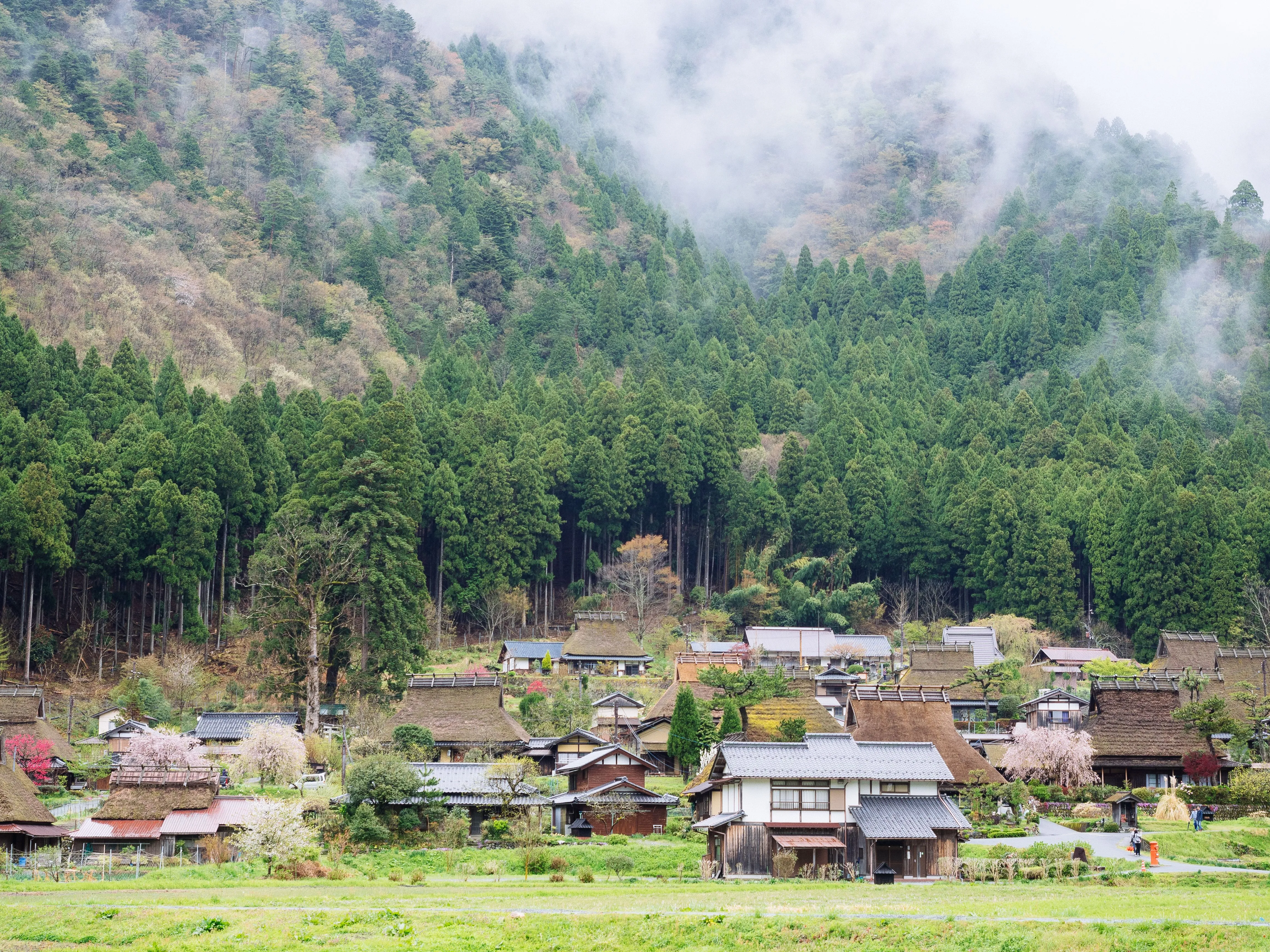
Is it actually worth a whole day?
Yes, if you commit to it rather than squeezing it between temples. A rural day gives you thatched farmhouses, quiet valleys, and space that central Kyoto can’t — but only if you catch an early bus and don’t try to add a shrine circuit on top. Pick one place and let it be the day.
Kyoto’s temples are extraordinary, but by your third day the crowds wear thin. An hour or two out, the prefecture turns into river valleys, cedar forest, and farming villages where you can hear the water. The trade is real, though: you swap a dense list of sights for one slow, quiet place. If that sounds like a relief, a countryside day is worth it.
From what I’ve seen, the travelers who enjoy a countryside day the most are the ones who pick one valley and stay — not the ones chasing three stops before dark.
Where can I go for a countryside day from Kyoto?
You have options at different distances. Ohara, Kurama and Kibune, and Takao are close rural valleys under an hour out, good for a half or full day. Miyama’s thatched village (Kayabuki no Sato) is the fuller trip at about two hours each way. Match the distance to how much time you have.
| Destination | The feel | Rough travel from Kyoto | Half or full day |
|---|---|---|---|
| Ohara | Temples in a rural valley | ~1 hour by bus | Half–full day |
| Kurama & Kibune | Forest, river, easy hike | ~30–45 min by train | Half–full day |
| Takao | Mountain temples, autumn leaves | ~50 min by bus | Half day |
| Miyama (Kayabuki no Sato) | Thatched village, open valleys | ~2 hours by train + bus | Full day |
Travel times are approximate and shift with season and timetable — always confirm the current schedule. If you have a full day and want the biggest change of scene, Miyama is the pick; if you have a morning or a tired afternoon, a closer valley does the job.
Which buses make it work?
Take a direct morning bus or train from central Kyoto toward your chosen area, and note the last return departure the moment you arrive. On a weekday the buses are calmer and the villages emptier. Miss the last bus and there’s no easy backup, so plan the return first.
The countryside runs on a thin timetable, and the last bus is the hard deadline that shapes the whole day — see reading Japanese-only bus timetables. Because those buses are few, a rental car is worth considering for Miyama in particular: it removes the last-bus pressure and lets you linger. Weighing that up for the rest of the trip? See car or train in rural Japan.
Where should I base myself for these day trips?
Base yourself in central Kyoto. Every one of these day trips leaves from Kyoto Station or the city centre, so a room near there means catching the first morning bus without a scramble — the single biggest factor in whether a countryside day feels calm or rushed.
Since the early bus decides everything, where you sleep decides how your day starts. Stay near Kyoto Station or the centre and you step straight onto the first departure; stay far out and you lose the quiet morning before it begins. In spring and autumn the best-placed inns book up fast — so it pays to look early. Here’s a live map of places to stay right in the heart of Kyoto:
How should I spend the day?
Go early, keep it to one place, and build in nothing you’d have to rush for. A good rural day is a village walk, a local lunch, an onsen or a riverside sit, and the return bus — not a checklist. The unhurried pace is the whole point.
A simple full-day shape that works:
- Pick one area and check the last bus back before you leave.
- Take a morning departure on a weekday.
- Walk the village or valley, then have a local lunch.
- Add one slow thing — an onsen, a short hike, a riverside rest — and catch the return bus.
| Choice | Rushed temple loop | This day trip |
|---|---|---|
| Pace | Frantic | Calm |
| What you see | Crowds | Countryside |
| Main risk | Low | Missing the last bus |
Staying the night instead of rushing back? See how to book a ryokan with no English website.